Charity Is Not Enough: What Reverend Dr. Leon H. Sullivan Taught Us About Economic Justice
By Portia Fullard
Every November, we are reminded to be thankful for what we have and generous toward those who have less. Food drives multiply. Donations increase. Families gather around tables filled with more than enough.
But somewhere across Philadelphia, another family is deciding which bill can wait, whether groceries will last until payday, or how to keep a roof over their heads.
That contrast should make us uncomfortable.
While generosity matters, we must confront a harder truth: We cannot donate our way out of poverty. We cannot celebrate charity while accepting the systems that make charity necessary.
Philadelphia is a city of extraordinary potential, with its wealth, institutions, and opportunities. Yet too many residents remain locked out of the economy they help sustain. Families struggle to afford housing. Entrepreneurs lack access to capital. Young people face financial barriers to education.
These are not failures of ambition. They are failures of access, investment, and social, civic, and political will.
Sixty years ago, Reverend Dr. Leon H. Sullivan understood this distinction.
He recognized that economic freedom required more than goodwill. It demanded ownership, collective action, and the courage to challenge systems designed to exclude Black communities.
Through his revolutionary 10-36 Plan, Sullivan organized community members to contribute $10 monthly for 36 months. Those contributions helped establish Progress Plaza, the nation’s first Black-owned shopping center, creating opportunities for Black businesses, workers, and families.
But Sullivan’s vision wasn’t supported by community dollars alone.
The Ford Foundation and Philadelphia institutions including Wanamaker’s, Tastykake, Strawbridge & Clothier, and the Connelly family understood his vision and committed financial resources to advancing his work.
They recognized something we must remember today: Economic empowerment requires investing in the infrastructure that allows communities to thrive, not simply responding to their immediate needs.
As Dr. Sullivan declared, “We’ve got to get ourselves together so that we can utilize the resources we have collectively.”
He understood that real change required shared responsibility.
Today, as the Leon H. Sullivan Charitable Trust celebrates its 60th anniversary, that message remains urgent.
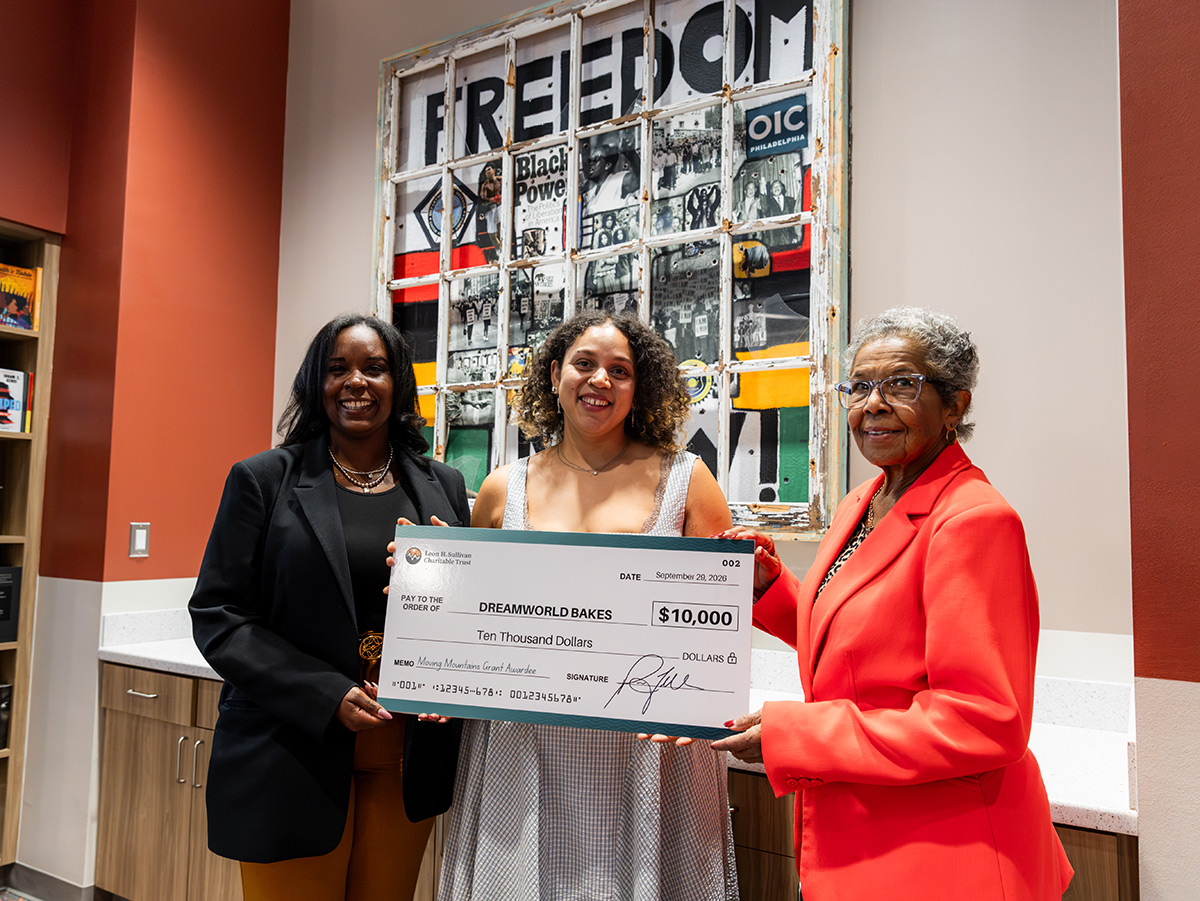
Our investments in students, small businesses, and community-based nonprofits continue Sullivan’s belief that communities deserve the resources to determine their own futures.
But sustaining that vision requires more than one organization.
We have endured for 60 years because individuals, corporations, and institutions understood what was at stake. They invested in a vision that extended beyond their own interests and lifetimes.
As we prepare to move with courage into the next 60 years, we must ask: Where is that understanding today?
Where are the corporations willing to make bold investments beyond charitable campaigns? Where are the philanthropic institutions prepared to invest in lasting economic power rather than temporary relief?
And where are the leaders willing to recognize that Philadelphia’s prosperity cannot be separated from the prosperity of its people?
There is nothing wrong with feeding a family this Thanksgiving. Hunger demands an immediate response. But we must also question why that family remains hungry in a city with so much.
We must refuse to confuse annual generosity with the sustained commitment that meaningful transformation demands.
We cannot honor Sullivan’s vision while becoming comfortable with the inequities he challenged.
The question is not whether we have the resources. It is whether we have the courage and collective will to invest them.
Economic justice cannot be seasonal. Neither can our responsibility to one another.
Portia Fullard is the Executive Director of Leon H Sullivan Charitable Trust. Portia leads the Trust’s philanthropic investments, operations, partnerships, and stewardship of its Human Services Center in North Philadelphia